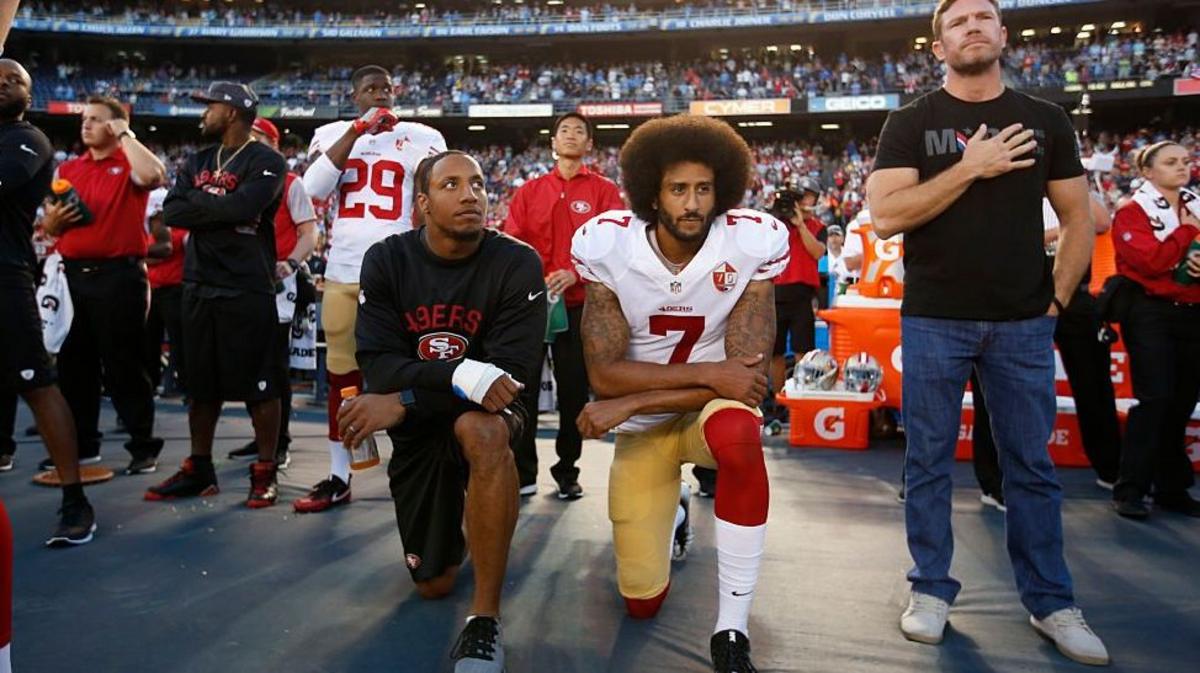
Ten years after his controversial protest against racial injustice, Colin Kaepernick, the former NFL quarterback, reflects on his decision to kneel during the US national anthem. In an interview, he expressed no regrets about his actions, which he believes led to his exile from the sport he loved. Kaepernick's protest, which occurred in September 2016, was a response to racial inequality and police brutality in the US. His act of kneeling during the Star-Spangled Banner before a pre-season game with the San Francisco 49ers sparked both admiration and criticism. While many saw him as a hero, others perceived his actions as disrespectful to the military. Donald Trump, then a presidential candidate, was among those who condemned Kaepernick's protest. Despite leading the 49ers to the Super Bowl in 2013 and throwing 16 touchdowns in his final season, Kaepernick never found another team after opting out of his contract with the 49ers in March 2017. He believes he anticipated the reaction to taking the knee but was surprised by the support he received and the opposition he faced. Kaepernick later filed a grievance against NFL team owners, accusing them of conspiring not to hire him because of his protests. A financial settlement was reached in 2019. Today, Kaepernick remains a symbol of the civil rights movement, although the momentum behind athlete activism seems to have slowed in recent years.
In the wake of George Floyd's murder while in police custody in Minneapolis in 2020, taking the knee became a feature of Black Lives Matter protests and spread across sport. England's men's and women's football teams were among those who followed suit. Kaepernick was moved by this development, stating it was humbling to see national teams protesting against racism. However, he acknowledges that there is still a lot of work to be done in addressing racism in the UK and globally.
Kaepernick's interview is available now, marking ten years since his initial protest. Despite keeping a low profile for most of the past decade, Kaepernick remains a standard-bearer for the civil rights movement.