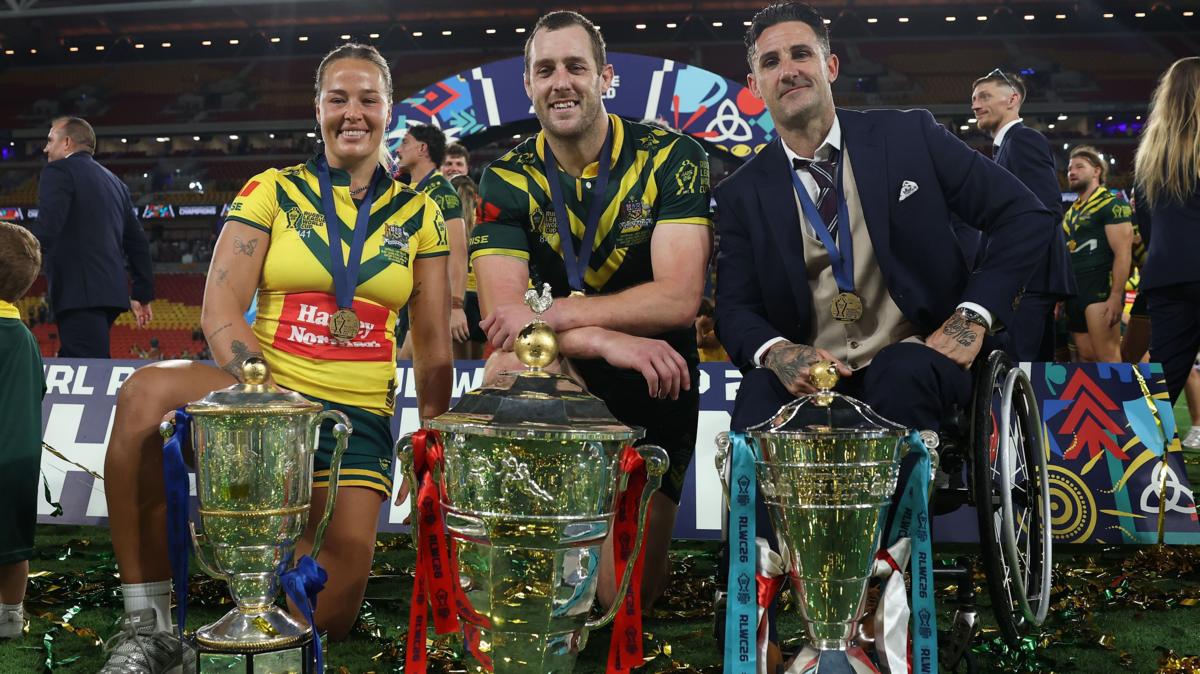
The 2026 Rugby League World Cup, held across multiple platforms including men's, women's, and wheelchair tournaments, has elicited a variety of reactions. The tournament, co-hosted by Australia and New Zealand, witnessed captivating performances such as Kalyn Ponga's record-breaking comeback after a broken arm in just 23 days, Jodie Cunningham's grit in the face of injury, and England's wheelchair team's unstoppable rise. However, the men's group format, with only 10 teams participating instead of 16, raised eyebrows and questions about fair representation.
The success of the World Cup is a subject of debate, with differing opinions emerging from both hemispheres. For Australia, who clinched their fourth consecutive men's and women's titles, the tournament was a resounding triumph. Tonga and Samoa, elevated to Tier One status due to their impressive performances, added vibrancy and passion, attracting a larger fan base, particularly in the USA, host of the 2030 World Cup.
However, not everyone shared this optimism. The reduction in the number of matches limited opportunities for newcomers like Jamaica and Greece, who made a splash as debutants in 2022. Furthermore, viewer access varied greatly, with Australia offering free-to-air live television coverage, while fans in the UK and North America had to subscribe to Premier Sports to watch games. With many matches scheduled at inconvenient times for British and American viewers, some feel a chance to expand the game's reach was missed.
The International Rugby League aimed to keep costs down by basing many players in Australia, where they compete in either the NRL's men's competition or its Women's Premiership. However, this strategy also raised concerns about the fairness of the competition, particularly with regards to the uneven distribution of prize money between teams. Critics argue that a more inclusive format, featuring quarter-finals and matches between all teams in the six-team pool, could have made the World Cup a true festival of rugby league.