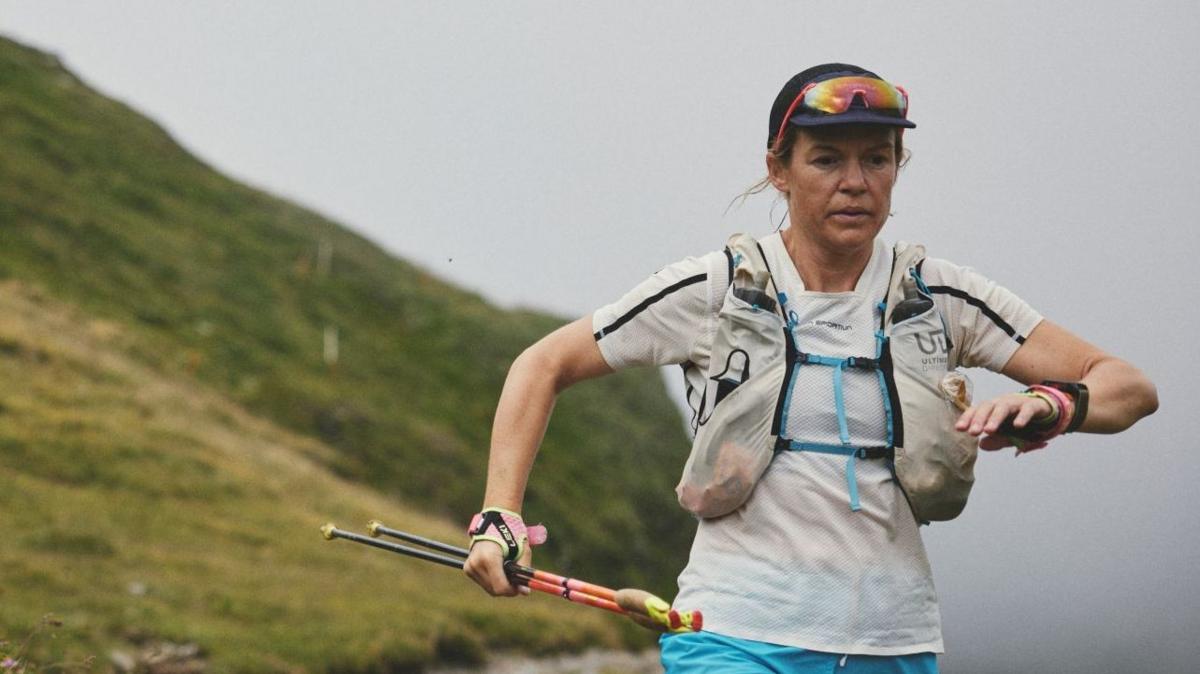
In a groundbreaking shift for the endurance running world, female athletes have been making waves, breaking records, and even claiming victories in races previously dominated by men. Last summer, Rachel Entrekin set a new course record at the Montane Summer Spine Race, while Sophie Woods smashed the overall record at the Via Alpina, marking the first time women have outperformed their male counterparts in these grueling events. This trend continued in May when Rachel Entrekin became the first woman to win the Cocodona 250 in Arizona. The question now is whether there's a physiological or psychological advantage that gives women an edge in ultra-endurance running. While research is still emerging, Professor Andy Jones at the University of Exeter suggests three potential explanations: higher fat stores for energy, more oxygen-efficient muscle fibers, and greater resistance to fatigue. However, he notes that the science in this area is still developing, and more studies need to be conducted before definitive conclusions can be drawn. As for mental strength, female athletes like Sophie Woods and Yngvild Kaspersen believe women excel in endurance events due to their ability to persevere, adapt, and maintain focus under extreme conditions.
In 2015, Lazarus Lake, race director of the Barkley Marathons - one of the world's hardest ultramarathons - challenged anyone to prove women could complete the event. Nine years later, in 2024, Jasmin Paris from Midlothian became the first woman to accomplish this feat, finishing the extreme 100-mile course with just one minute and 39 seconds to spare of the 60-hour cut-off. These achievements have sparked discussions about whether women are better suited for endurance exercise, particularly when compared to men in shorter races where there's a larger performance gap of approximately 10-12%. However, as distances increase, this gap narrows significantly, with women outperforming men in some cases.
The gender pace gap diminishes to 0.25% in 100-mile races, according to a study conducted by RunRepeat in collaboration with the International Association of Ultrarunners, which analyzed over 20 years of amateur ultra-race data. Anything further than 195 miles, and women have the potential to be faster. While the physiological reasons for this trend are still being researched, it's clear that female endurance runners are making their mark in a traditionally male-dominated field. As more records fall and women continue to push boundaries, we may see an even greater shift towards gender parity in ultra-endurance running events.